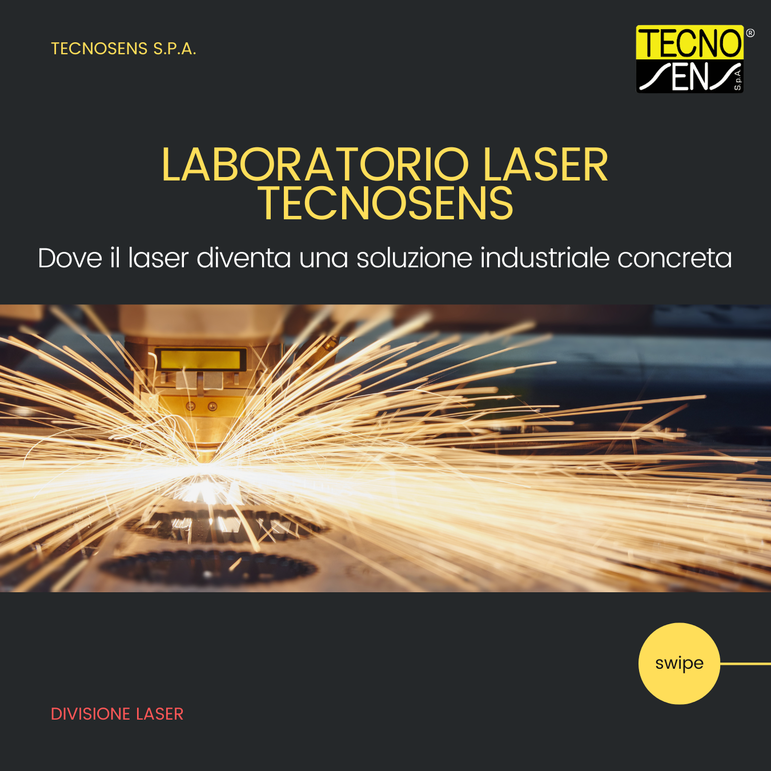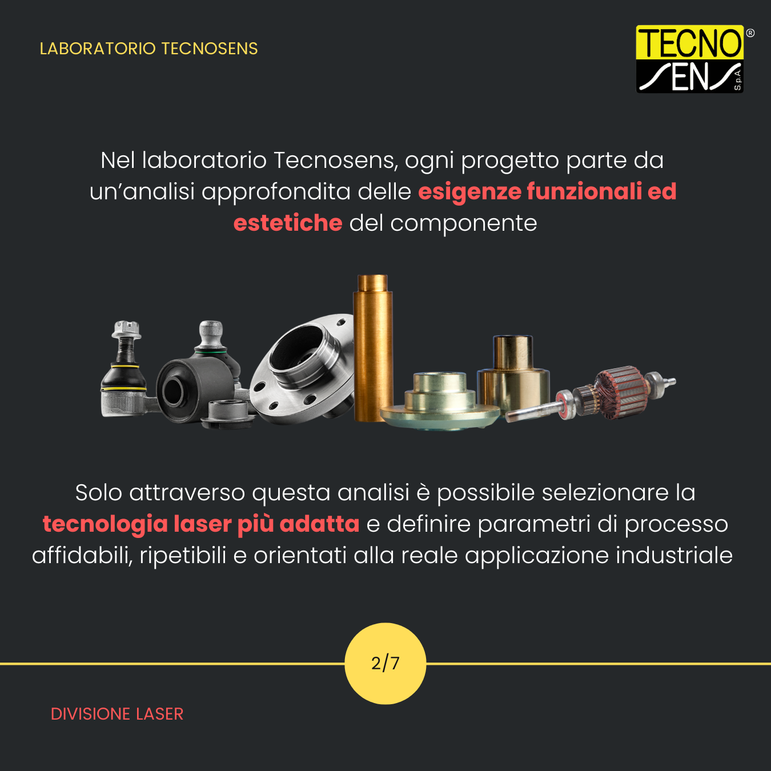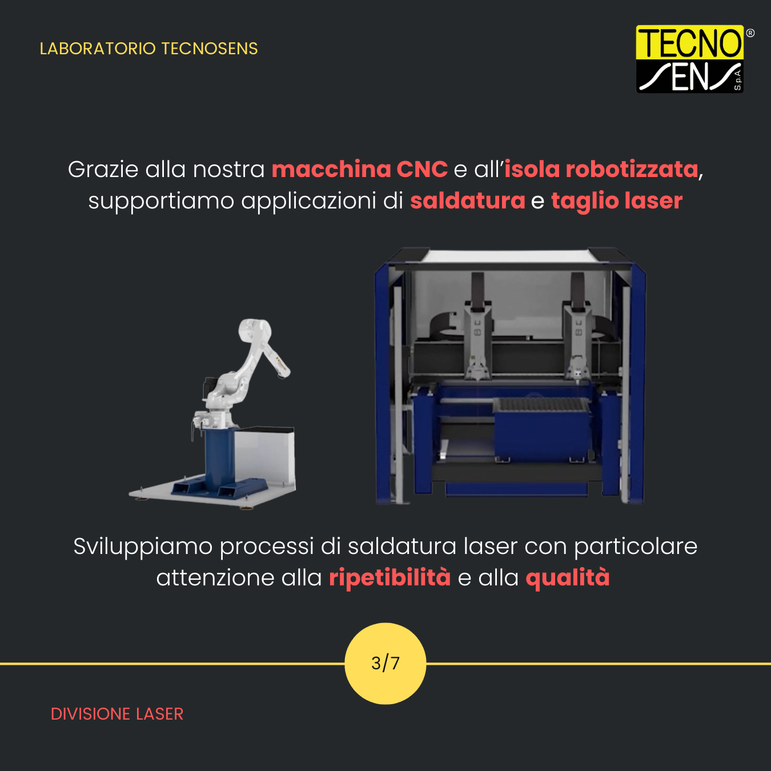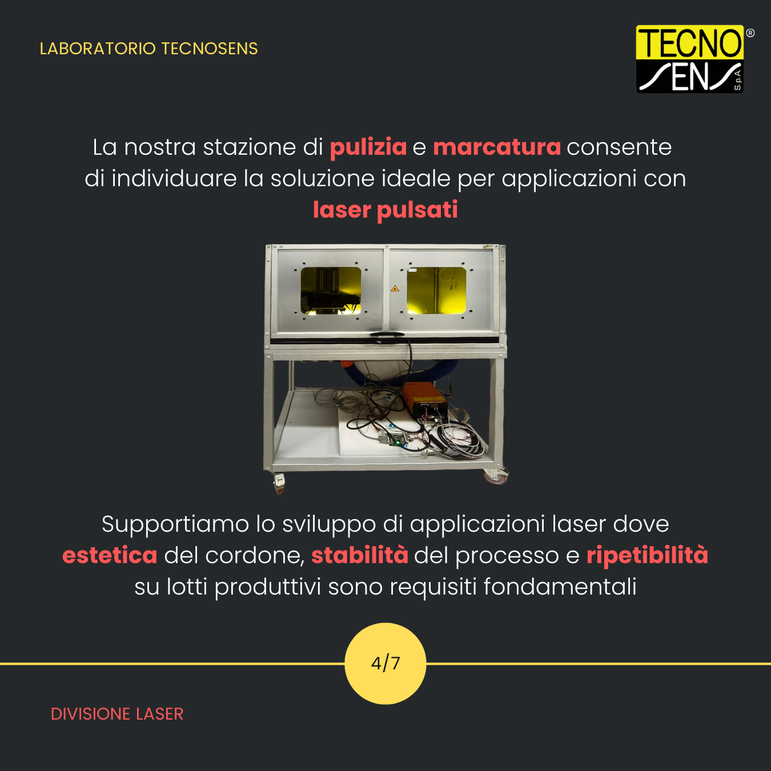
In our laboratory, laser processes are not approached as simple, standard operations, but as tailor-made solutions: each project begins with an in-depth analysis of the application, to help us fully understanding the functional and aesthetic requirements of the component and selecting the most suitable laser technology.
This approach allows us to reduce process criticalities, improve result repeatability, and achieve reliable performance across a wide range of metallic and non-metallic materials. The various laser technologies available in our laboratory—from welding and cutting to marking and cleaning—are applied and optimized according to specific application needs.
Welding: stability and quality even with the most complex materials
Laser welding is an extremely versatile technology, capable of precisely joining even complex and dissimilar materials, but it is also among the most process-sensitive applications.
In our laboratory, we carry out targeted tests to adapt welding parameters to specific application requirements, ensuring repeatable results and consistent quality.
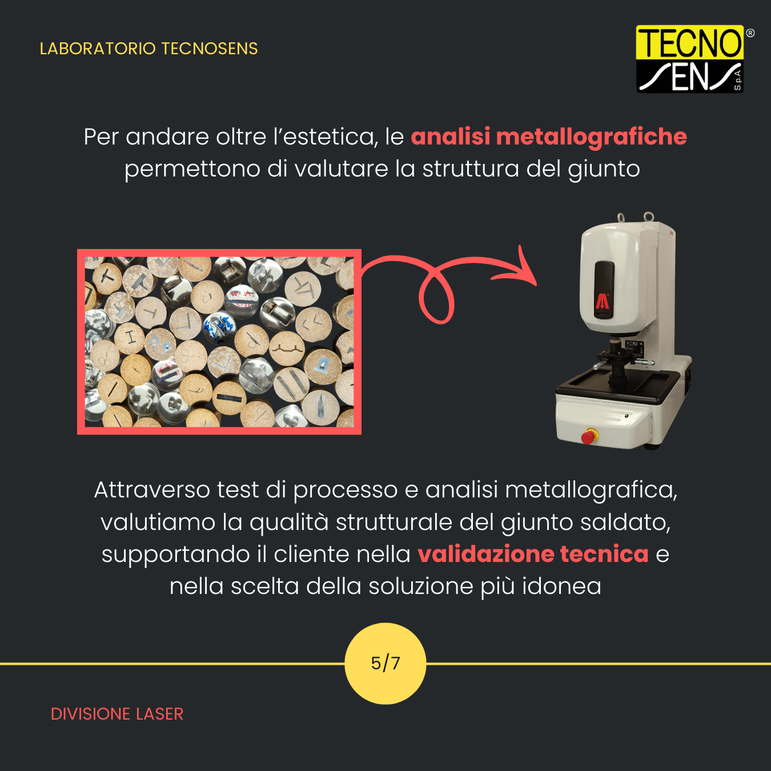
To support these tests, we also perform metallographic analyses, allowing us to assess joint structure and identify potential internal defects such as voids or cracks.
Cutting: precision and edge quality
Laser cutting is one of the most widely used industrial processes, employed to achieve complex geometries with high precision and clean, burr-free cut surfaces.
At the Tecnosens laboratory, we analyze the effects of cutting on materials, evaluating factors such as edge roughness, section quality, and local mechanical alterations.
Through dedicated analyses, we support customers in selecting the cutting method best suited to the characteristics of the final product and production requirements, balancing performance with process speed.
Cleaning: controlled and sustainable removal
Laser cleaning is an increasingly requested solution for surface preparation prior to further processing or for component refurbishment.
In our laboratory, we perform cleaning tests on customer-supplied samples, defining optimal parameters for the selective and controlled removal of rust, paint, or other process contaminants.
The focus is always on protecting the base material, avoiding unwanted alterations and ensuring a surface ready for subsequent operations.
Marking: readability, durability, and traceability
Laser marking is another process with growing relevance and versatility, playing a key role in ensuring traceability, identification, and information on components: from simple text to high-density 2D codes, the Tecnosens laboratory evaluates ideal marking conditions for each material and application, balancing contrast, readability, depth, and long-term durability.
This aspect is particularly critical in industries where markings must withstand subsequent treatments or harsh environmental conditions, ensuring reliable results and compliance with required standards.
A working method based on analysis, testing, and continuous support
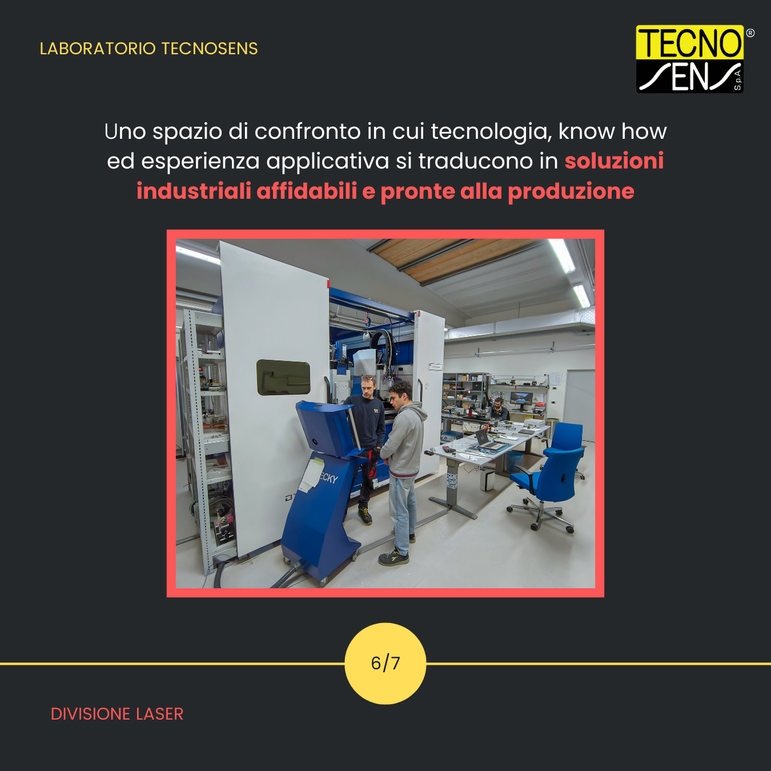
At the Tecnosens laboratory, every test is clearly and thoroughly documented through technical reports describing objectives, parameters used, results achieved, and operational considerations. Customers are welcome to participate in testing activities, engage directly with our technicians, and share evaluations of the outcomes.
Once laboratory activities are completed, customer support continues through the implementation phase, with feedback, operational guidance, and knowledge transfer to ensure effective adoption of the identified solutions.
Research, analysis, and continuous support are the pillars of our laboratory: a place where laser technology is transformed into practical knowledge, serving efficiency and quality in manufacturing processes.